1. Addressing the "Hidden Leak" Pain Point: Precision Localization
The biggest challenge for maintenance teams isn't knowing that a leak exists, but knowing where it is. In a complex manifold or a 100-meter pipeline, finding a micro-leak can take hours of downtime.
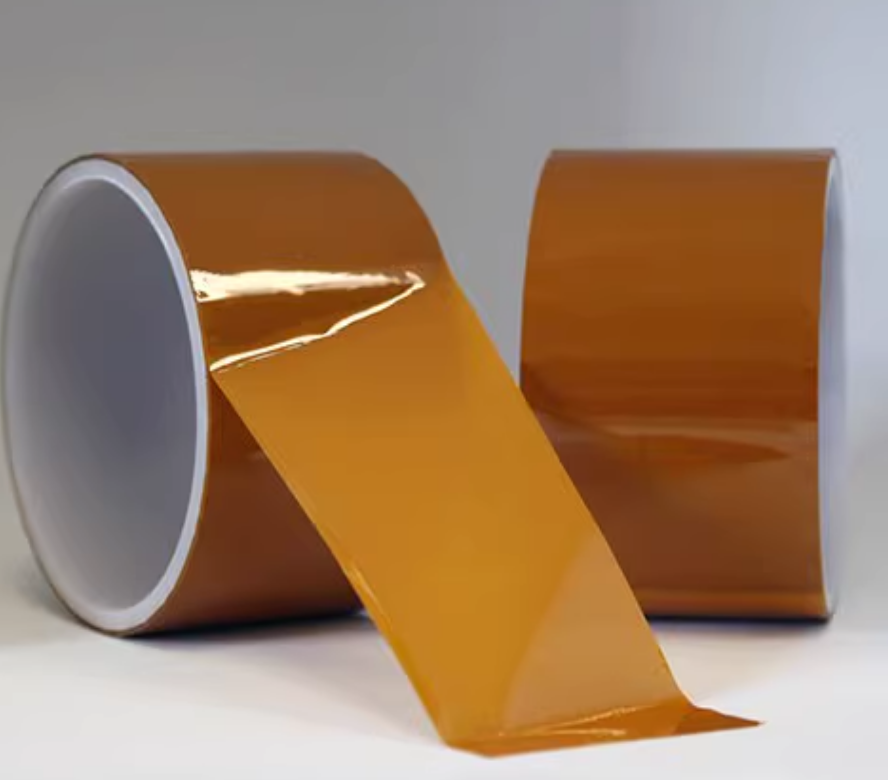
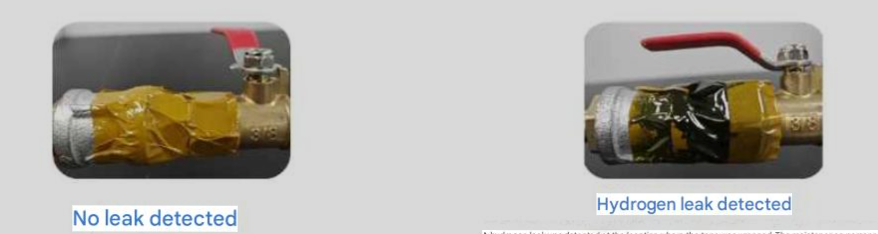
- The Solution: Our color-changing tape provides a 10-second response. By turning from Amber to Black at the site of the leak, it acts as a "visual GPS" for technicians.
- Sensitivity Threshold: It detects concentrations as low as 1% $H_2$. Given that the Lower Explosive Limit (LEL) of hydrogen is 4%, this tape provides a 300% safety buffer, allowing for intervention long before a combustible mixture forms.
2. Cost-Efficiency: Passive Monitoring vs. Expensive Infrastructure
B2B buyers often struggle with the high CAPEX and OPEX of scaling electronic sensor networks across vast industrial sites.
| Feature | Electronic Gas Sensors | Color-Changing H2 Tape |
|---|
| Power Requirement | Constant Electricity/Battery | Zero (Passive) |
| Calibration | Required Every 6–12 Months | No Calibration Needed |
| Installation | Complex Wiring/Integration | Peel-and-Stick (Silicone PSA) |
| Failure Risk | Sensor Drift/Dead Batteries | Chemical Reaction (Fail-Safe) |
![]()
Strategic Advantage: The tape functions as a cost-effective "Layer of Protection" (LOPA) that complements existing digital systems without adding to the electricity bill or maintenance schedule.
3. Reliability in Harsh Environments (Weather & Chemical Resistance)
A common pain point for outdoor hydrogen storage and refueling stations is sensor interference from humidity, wind, or extreme temperatures.
- Silicone Pressure-Sensitive Adhesive (PSA): Engineered to bond to stainless steel, carbon steel, and specialized alloys used in hydrogen service.
- Weather-Hardened: The tape is UV-resistant and maintains its chemical reactivity in diverse climates, making it ideal for outdoor pipelines, valves, and flange gaskets.
- Reversibility: Unlike one-time indicators, this tape can slowly recover its original color once the $H_2$ source is removed, allowing for post-repair monitoring.
4. Industry-Specific Applications: From Labs to Heavy Industry
To meet "Zero Leakage" compliance (ISO/TC 197 or local EHS standards), this tape is now a requirement in:
- Hydrogen Refueling Stations (HRS): Monitoring high-pressure dispenser hoses and couplings.
- Chemical/Pharmaceutical Reactors: Detecting leaks in hydrogen-rich protective atmospheres.
- Power Generation: Ensuring seal integrity in hydrogen-cooled generators.
- BFM & Flexible Connectors: Providing visual proof of seal on vibrating equipment where mechanical fatigue is common.
5. Testing and Validation (The 100 mL/min Benchmark)
Safety engineers require data-backed reliability. Our recommended test method ensures every roll meets industrial standards:
- Controlled Leak Test: Use a $3/8"$ or $1/2"$ valve setup.
- Flow Rate: Inject $100\%$ hydrogen at 100 mL/min.
- Visual Metric: Full color transition to black should occur within 60 seconds, providing undeniable proof of performance before the system goes live.